
Waiting Lists: 2 Years, or just 2 Weeks?
Approximately 87.5 people per 100,000 are affected by Morton’s neuroma. As those unlucky enough to be affected by Mortons neuroma know only too well, the negative effects of such a seemingly small problem can have a large impact on everyday quality of life.
Sufferers of Morton’s neuroma frequently report that the discomfort has put a stop to the everyday activities of daily living. The things that most of us take for granted, such as being able to go for long walks, going to the gym, being able to run after their child or grandchild in the playground.
Assessment tools such as the Manchester Oxford pain questionnaire consistently bear this out, and show that Morton’s neuroma has a negative impact on mental health and social interactions (2).
After normal life has stopped there is the wait, the wait to see which treatment might work. Most NHS patients follow a treatment pathway that usually lasts 25 months on average (2).
During this waiting period patients go through a process of referral to podiatry or physiotherapy, often followed by another referral for imaging, and finally, after the imaging, treatment is commenced.
Table of Contents
Orthotics
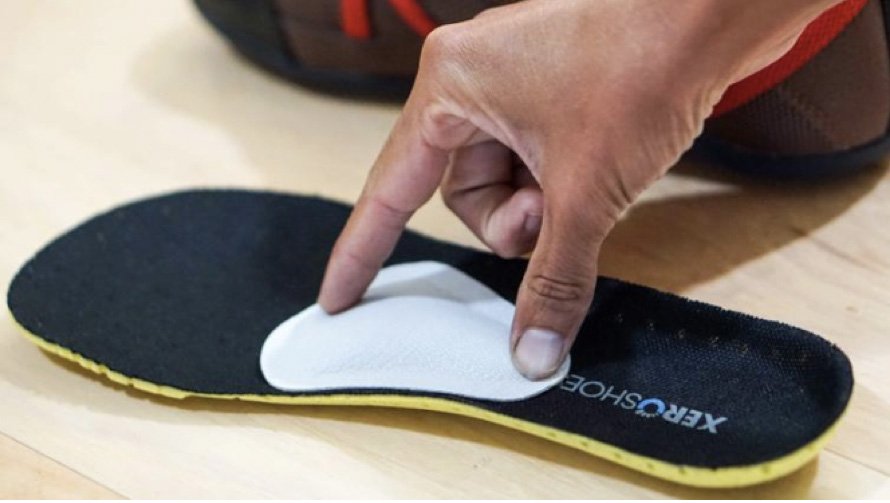
Treatment typically consists of advice about how to manage the discomfort by wearing wider fitting shoes with a reduced heel height. If footwear alteration measures don’t work, patients are often offered shoe inserts also known as orthotics. Orthotics are thought to alter foot mechanics and sometimes push the metatarsal bones away from each other to make more room for the neuroma to sit in. Such orthotics have a dome-shaped pad called a metatarsal dome as seen below.
Other types of orthotics are designed to limit the movement of the foot called pronation. However, a 2016 study that followed 23 patients with Mortons neuroma over a two–and–a–half year period showed that reducing levels of pronation failed to produce any benefit (3).
Steroid injections
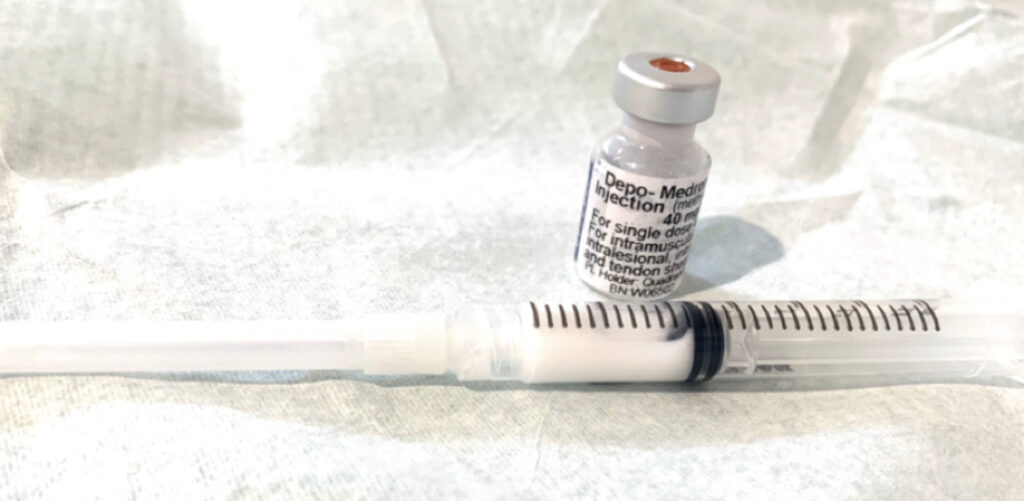
Steroid injections are offered when orthotics can’t be tolerated by the patient or fail to work. Steroid injections are either given ‘blind’ (without image guidance) or with image guidance, typically with ultrasound.
The beneficial effects of steroid injections typically last for 3 months. A 2020 published review of 590 patients who received steroid injections found that the diameter of the neuroma is a good indicator as to whether or not benefit will be obtained. Steroid injections only seem to work for small neuromas and if the neuroma is medium-sized or over 6.3 mm in diameter outcomes are poor, and some argue that when the neuroma is 6.3 mm steroid injections should not be offered (4).
As a rule of thumb, if there is a prominent clicking sensation when the bones in the foot are squeezed, or if the patient can feel a lump like sensation or has a pebble-in-the-shoe sensation the chances are the neuroma will be over 6.3 mm (5).
When the effects of the steroid wear off after 3 months the injections can be repeated. However, most patients will only be offered two or occasionally three because of the risk of thinning of the protective plantar fat pad, and for neuromas of the 2-3rd interspace, there is an increased risk of rupturing an important stabilising structure of the 2nd toe called the plantar plate. Plantar plate ruptures are acutely painful and lead to a 2nd toe that is fee floating and not contacting the ground.
Approximately 75% of NHS patients will have tried a combination of steroid injections and orthotics over a 25-month period. If by the end of that period patients are still symptomatic they are generally offered excision surgery which is the final step in the pathway, however at least 35% of patients after excision have the same levels of pain and for some greater pain (1).
Cryosurgery
Cryosurgery has an excellent safety profile for the treatment of nerve issues because the key building blocks of the nerve, the myelin sheath, and the endoneurium ultimately remain intact, which allows for the nerve to fully regenerate (6).
Cryosurgery offers an effective alternative to excision surgery, with excellent treatment outcomes that are mostly superior to excision surgery.
Cryosurgery frequently does not require the patient to use orthotics or have steroid injections. It is however worth bearing in mind that at best, all that the cryosurgery will do is “wipe the slate clean” meaning that it will put you back into a position that you were in before you developed the neuroma. If, however, you developed your neuroma because of how your feet function you may need to consider orthotics (often much smaller) to prevent reoccurrence.
Thankfully cryosurgery can be initiated right from the onset of symptoms or diagnosis. Meaning you don’t have to suffer for 25 months.
Don’t wait for 25 months our current waiting time is around 2 weeks!
References
- 1 Latinovic R, Gulliford MC, Hughes RA. Incidence of common compressive neuropathies in primary care. J Neurol Neurosurg Psychiatry. 2006 Feb;77(2):263-5. doi: 10.1136/jnnp.2005.066696. PMID: 16421136; PMCID: PMC2077603.
- 2 Bucknall V, Rutherford D, MacDonald D, Shalaby H, McKinley J, Breusch SJ. Outcomes following excision of Morton’s interdigital neuroma: a prospective study. Bone Joint J. 2016 Oct;98-B(10):1376-1381. doi: 10.1302/0301-620X.98B10.37610. PMID: 27694592.
- 3 Kilmartin TE, Wallace WA. Effect of pronation and supination orthosis on Morton’s neuroma and lower extremity function. Foot Ankle Int. 1994 May;15(5):256-62. doi: 10.1177/107110079401500505. PMID: 7951964.
- 4 Samaila E, Colò G, Rava A, Negri S, Valentini R, Felli L, Magnan B. Effectiveness of corticosteroid injections in Civinini-Morton’s Syndrome: A systematic review. Foot Ankle Surg. 2020 May 18:S1268-7731(20)30081-3. doi: 10.1016/j.fas.2020.05.001. Epub ahead of print. PMID: 32600970.
- 5 Mahadevan D, Venkatesan M, Bhatt R, Bhatia M. Diagnostic Accuracy of Clinical Tests for Morton’s Neuroma Compared With Ultrasonography. J Foot Ankle Surg. 2015 Jul-Aug;54(4):549-53. doi: 10.1053/j.jfas.2014.09.021. PMID: 25432459.
- 6 Trescot AM. Cryoanalgesia in interventional pain management. Pain Physician. 2003;6(3):345-360.
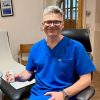
Mr Weaver has a special clinical interest in podiatric regenerative medicine and was among the first clinicians in Europe—and the first in the UK—to offer cryosurgery (cryoablation) for Morton’s neuroma. Driven by a commitment to excellence in patient care, he focuses on delivering precise, evidence-based treatments that prioritise long-term recovery and patient comfort.
Over the past 18 years, he has performed approximately 20,000 procedures for Morton’s neuroma and bursitis. This extensive experience allows him to provide a highly personalised approach, ensuring every patient receives the specialist attention required for the best possible outcomes.
His professional memberships include the Institute of Podiatrists, the International Society of Cryosurgery, and the British Medical Ultrasound Society.