
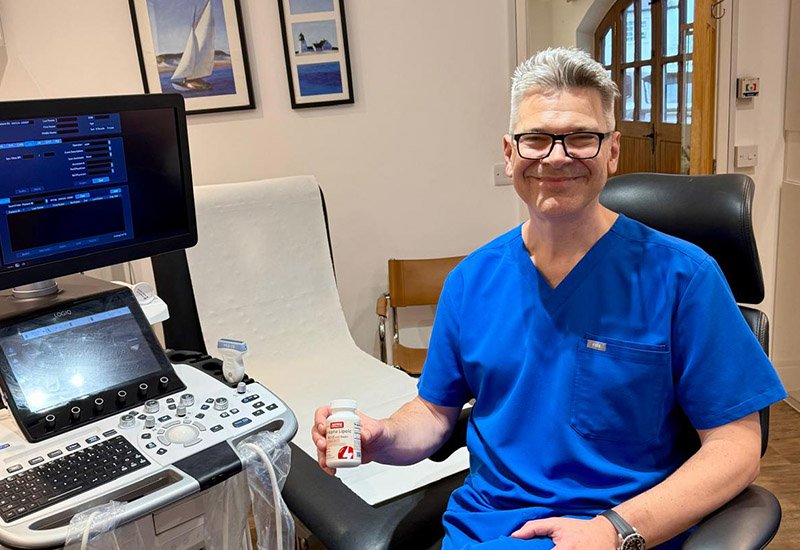
Morton’s Neuroma Treatment: Supplements, Self-Help & Cryosurgery
Table of Contents
Supporting Nerve Health in Morton’s Neuroma
Self-Help Strategies, Supplements, and When to Consider Cryosurgery
Morton’s Neuroma Symptoms and Nerve Pain
Morton’s neuroma is a common cause of forefoot pain and altered sensation, often described as burning, tingling, sharp pain, or the feeling of walking on a pebble beneath the ball of the foot. Symptoms most commonly occur between the third and fourth toes, although other webspaces may be affected. Pain is frequently aggravated by tight footwear, prolonged walking, or standing, and many patients also report numbness or electric-shock–like sensations.
Although often referred to as a “neuroma,” the condition is best understood as a chronic compressive and irritative neuropathy of a digital nerve. Mechanical compression, repetitive loading, and local inflammation combine to disrupt normal nerve signalling and generate Morton’s neuroma nerve pain.
Self-Help Strategies for Morton’s Neuroma
In the early and moderate stages, symptoms of Morton’s neuroma may improve with sensible self-help strategies aimed at reducing mechanical stress on the affected nerve. These typically include:
- Wearing wider, well-fitted shoes with a low heel
- Avoiding narrow or high-heeled footwear
- Using orthoses or metatarsal pads to offload pressure
- Modifying activities that repeatedly load the forefoot
These measures remain the foundation of treatment and are always addressed first. However, even with appropriate footwear and biomechanical support, some patients continue to experience persistent nerve-related pain.
Supplements for Morton’s Neuroma and Nerve Health
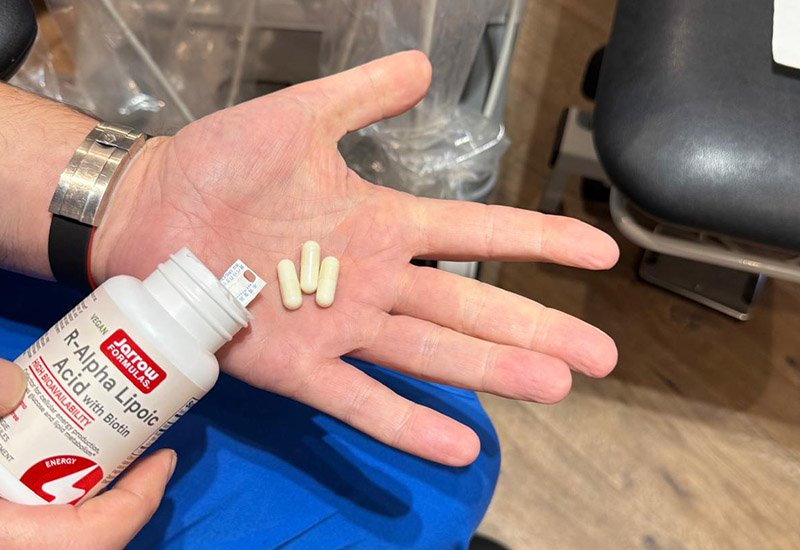
In over 20 years of treating patients with Morton’s neuroma, we have observed that some individuals report symptomatic improvement when certain nutritional supplements are introduced alongside standard conservative measures. While this observation is anecdotal rather than definitive, it has been sufficiently consistent to warrant discussion.
The supplements most commonly associated with perceived benefit are:
- Alpha lipoic acid
- Magnesium
- Vitamin B12
These supplements do not reverse a neuroma or correct nerve compression. Instead, they may help optimise the biological environment of the nerve, potentially reducing symptom intensity in selected patients.
Alpha Lipoic Acid and Nerve Pain
Alpha lipoic acid (ALA) is a naturally occurring compound with potent antioxidant and anti-inflammatory properties. It has been widely studied in neuropathic pain conditions, particularly diabetic peripheral neuropathy.
ALA is thought to support nerve health by:
- Reducing oxidative stress within nerve tissue
- Regenerating endogenous antioxidants such as glutathione
- Modulating inflammatory pathways involved in neuropathic pain
Clinical studies in diabetic neuropathy demonstrate improvements in symptoms such as burning, tingling, and numbness, commonly at doses around 600 mg daily. Evidence in chemotherapy-induced neuropathy is mixed, likely reflecting differences in chemotherapy agents and study design, although some trials show improvements in both symptoms and inflammatory markers.
Although Morton’s neuroma is a focal compressive neuropathy of the foot, the underlying processes of nerve irritation, inflammation, and altered signalling overlap with those seen in other neuropathic conditions. For this reason, ALA is often considered a supportive adjunct within a broader Morton’s neuroma treatment plan.
Magnesium and Neuromuscular Support
Magnesium plays an important role in normal nerve conduction, neuromuscular stability, and pain modulation. Suboptimal magnesium levels are relatively common and may contribute to increased nerve excitability and muscle tension.
Magnesium may help by:
- Supporting normal nerve impulse transmission
- Reducing associated muscle tightness in the foot and lower limb
- Helping dampen heightened pain sensitivity
Clinically, magnesium appears most helpful in patients who experience cramping, aching, or more diffuse foot discomfort alongside focal nerve pain.
Vitamin B12 and Compressive Neuropathies
Vitamin B12 (cobalamin) is essential for normal nervous system function. It plays a critical role in myelin synthesis, nerve repair, and cellular metabolism within nerve tissue. Deficiency — or even marginal insufficiency — is a well-recognised cause of peripheral neuropathy.
Systematic reviews examining vitamin B12 and neuropathy have identified evidence from approximately 20–30 clinical studies suggesting that B12 supplementation can improve peripheral neuropathic pain. While much of the literature focuses on diabetic neuropathy, these reviews include a range of neuropathic conditions, including compressive and entrapment-related neuropathies.
From a mechanistic perspective, this is biologically plausible. Chronic nerve compression, as seen in Morton’s neuroma, is often accompanied by metabolic stress, inflammation, and disruption of normal nerve signalling. Adequate vitamin B12 levels are essential for maintaining the myelin sheath and supporting nerve resilience under these conditions.
Meta-analyses and observational studies also demonstrate that:
- Lower B12 levels are associated with peripheral neuropathy
- Elevated homocysteine and methylmalonic acid correlate with nerve dysfunction
- Supplementation is associated with reductions in neuropathic pain scores, particularly where deficiency exists
While evidence specific to Morton’s neuroma is limited, optimising vitamin B12 status is a low-risk and biologically sound consideration in patients with nerve-related foot pain.
Supplement Quality, Bioavailability, and Safety
The nutritional supplement market is not regulated to the same standard as prescription medicines, and product quality can vary significantly between manufacturers. Independent testing studies have shown that some supplements may contain variable amounts of the stated active ingredient or, occasionally, unwanted impurities.
For this reason, we recommend choosing supplements from trusted manufacturers that employ independent third-party testing and transparent quality-assurance processes.
Magnesium formulations
Citrate, glycinate, and malate forms are generally better absorbed. Magnesium oxide is less bioavailable and more likely to cause gastrointestinal side effects.
Alpha lipoic acid formulations
Naturally occurring ALA exists as R-alpha lipoic acid (R-ALA). Standard supplements usually contain a mixture of R-ALA and S-ALA. R-ALA–only formulations may offer improved bioavailability, although most clinical studies use standard ALA.
Important safety considerations for ALA
ALA is generally well tolerated but should be used with care in certain situations:
- Thyroid medication (thyroxine): ALA may interfere with thyroid hormone metabolism or medication absorption; discuss with a healthcare professional or pharmacist before use.
- Blood glucose levels: ALA can reduce blood glucose; caution is advised for people with diabetes or those taking glucose-lowering medications.
- Neuropathic pain medications: some patients taking gabapentin or pregabalin report reduced tolerability when ALA is introduced; professional guidance is advised.
Supplements should always be introduced thoughtfully, and more is not necessarily better.
Cryosurgery for Morton’s Neuroma
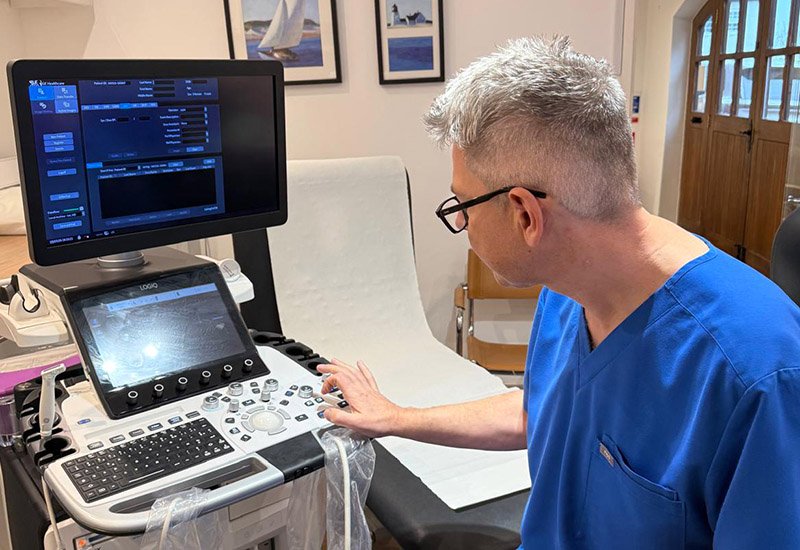
For patients whose symptoms remain intrusive despite appropriate self-help strategies and conservative care, ultrasound-guided cryosurgery offers a minimally invasive treatment option aimed at addressing the problem at its source.
Cryosurgery works by applying controlled freezing to the affected digital nerve under ultrasound guidance. This interrupts abnormal pain signalling while preserving surrounding structures. Importantly, the nerve is not removed. Instead, the treatment induces a controlled injury that allows the nerve to regenerate over time.
In our clinical experience — having now performed in the region of 20,000 cryosurgical procedures for Morton’s neuroma–bursal complexes — the regenerating nerve typically returns without the abnormal neuromatous or fibrotic tissue responsible for pain. As regeneration occurs, patients commonly report a gradual return of normal, pain-free sensation.
Post-treatment ultrasound imaging often supports these clinical findings. Follow-up scans frequently demonstrate restoration of a more normal-appearing digital nerve, along with a reduction in surrounding inflammatory change. Where an associated intermetatarsal bursitis is present, cryosurgery often leads to a concurrent reduction in inflammatory bursitis.
Unlike approaches that rely on ongoing symptom suppression, cryosurgery is designed to facilitate a long-term biological resolution of pain by allowing healthy nerve regeneration to occur.
In Summary
Morton’s neuroma lies at the intersection of mechanical compression and nerve dysfunction. While supplements such as alpha lipoic acid, magnesium, and vitamin B12 are not standalone treatments, both clinical experience and broader neuropathy research suggest they may play a supportive role in optimising nerve health for some individuals.
Used alongside sensible self-help strategies — and with a clear understanding of their limitations — they can form part of a balanced, patient-centred approach. Where symptoms persist, ultrasound-guided cryosurgery provides an effective and durable long-term option.
Clinical Disclaimer
The information provided in this article is for general educational purposes only and does not constitute medical advice. Nutritional supplements are not regulated to the same standard as prescription medicines, and individual responses may vary. Patients should always seek advice from a qualified healthcare professional or pharmacist before starting supplements, particularly if they are taking prescription medications, have underlying medical conditions, or are pregnant. Supplements should not be used as a substitute for professional diagnosis or treatment.

Mr Weaver has a special clinical interest in podiatric regenerative medicine and was among the first clinicians in Europe—and the first in the UK—to offer cryosurgery (cryoablation) for Morton’s neuroma. Driven by a commitment to excellence in patient care, he focuses on delivering precise, evidence-based treatments that prioritise long-term recovery and patient comfort.
Over the past 18 years, he has performed approximately 20,000 procedures for Morton’s neuroma and bursitis. This extensive experience allows him to provide a highly personalised approach, ensuring every patient receives the specialist attention required for the best possible outcomes.
His professional memberships include the Institute of Podiatrists, the International Society of Cryosurgery, and the British Medical Ultrasound Society.