Can Morton’s Neuroma ever be cured?
The short answer is yes, with Cryosurgery. And here's why...
Broadly speaking, there are two routes that you can take when it comes to treating a Morton's Neuroma. Those 2 routes are:
Table of Contents
Management of the Morton's Neuroma
- Orthotics - Most orthotics issue is that they work best in enclosed winter footwear and unless you have very specialist low profile dress orthotic they don’t work in open summer footwear. This means that every summer the neuroma tends to enlarge little by little, to the point that orthotics will eventually stop working.
- Footwear Modification - Choosing 'Zero-Degree Heel' Footwear, such as the Altra Zero-Drop range of footwear, Hocker, or Birkenstocks can be beneficial for Morton's neuroma sufferers due to the reduction of the forces on forefoot caused by the heel of the foot being higher than the toes. You can read about our footwear advice here
- Lifestyle Modification - includes a reduction of your normal day-to-day activities, such as driving to the shops rather than walking or avoiding events or parties at which you will likely be stood for a long length of time
- Reducing or Ceasing Sport of Activity - Reducing or omitting your favourite sport or activity can reduce irritation of the Morton's Neuroma by limiting the activity you are carrying out, and reducing time spent on your feet. For so many patients, this simply isn't an option, due to the enjoyment they feel when engaging in their chosen sport or exercise.
- Wearing metatarsal domes or pads.
All of these options generally help to alleviate the symptoms of the neuroma, but the neuroma is always there in the background. Your neuroma will soon start to throb if you even look at high-heeled shoe, let alone wear one! And then, there are lot of practical problems with management options.
Interventional Treatment for Morton's Neuroma
- Steroid injections are anti-inflammatories and cause atrophy (shrinkage of tissue). Many experts think it is the atrophy, both of the swollen nerve tissue and the tissue surrounding the nerve that helps relieve the neuroma pain. The ‘atrophy effect’ causes shrinkage of the tiny lumbrical muscles (that allow you to curl your toes) that surround the nerve. As the lumbrical muscles shrink due to the steroid, the neuroma is temporarily decompressed giving relief. However, after 3-4 months the lumbrical muscles recover and regain their bulk and the nerve is again compressed. Leaving you back where you began. In our experience steroid injections don’t seem to offer a long-term solution or cure for Morton’s neuroma.
- Alcohol injections generally provide terrible outcomes, and can often make matters a lot worse.
- Decompression surgery doesn’t cure a neuroma, it is simply an attempt to make room for the nerve, by cutting the transverse ligament (an important structure that stabilises the forefoot). The main issues with decompression are the risk of accidental injury to the nerve during the decompression surgery, and the amount of scar tissue that can form in the ligament and around the nerve after the decompression. Even when the symptoms are alleviated by decompression, the enlarged nerve (often measuring around a centimetre in diameter - normal diameter 2-3mm) will still be present in the forefoot and will often require a degree of ‘management’.
- Excision surgery - There is a little-known fact that every single person who has a neurectomy will develop a stump neuroma, because fusiform stump formation is the body’s normal physiological response of the body after a nerve has been cut. Only a relatively small number of patients (around 35%) ever report being totally pain free after excision surgery and many are made a lot worse. Can excision surgery be a cure for Morton’s suffers? If a cure is based on having no symptoms then possibly, for some patients. If a cure is based on having a normal nerve in the foot, then no.
Cryosurgery for Morton's Neuroma
Cryosurgery does not kill or permanently destroy the nerve. The freezing of the nerve triggers a breakdown of the scar tissue that caused the nerve to be enlarged. Typically, after 16 weeks the nerve has totally recovered and reduced from 1cm in diameter to measuring a healthy 2-3mm again. Cryosurgery is the only intervention at this moment in time that leaves no trace behind. If you scan the foot of a patient that has had cryosurgery all that will be seen is a normal forefoot. On the other hand, if you scan patients that have had the other interventions listed above you can generally see varying degrees of scar tissue and damage.
Cryosurgery has been performed since 1960's on nerves, and it is regularly carried out on various part of the body to provide pain relief. It's been proven that freezing nerves causes no damage at all, and if anything, it actually has a rejuvenating effect. One of the features of Morton's neuroma, is the development of abnormal blood vessels around the nerve sheath. This is a process called angiogenesis. Angiogenesis helps drive the inflammation process. Cryosurgery has been shown to reverse angiogenesis.
Being the first person in the UK to offer cryosurgery and having performed well over 3000 cases over the last 12 years, I now regard cryosurgery as the ‘Gold Standard’ for the treatment and cure of Morton’s neuroma.
If you are fed up of managing your neuroma and you are ready to choose an intervention, choose the right one, choose cryosurgery.
Get your foot and your life back. And let us help you.
Morton’s Neuroma Treatment: Supplements, Self-Help & Cryosurgery
Supporting Nerve Health in Morton’s Neuroma Self-Help Strategies, Supplements, and When to Consider Cryosurgery Morton’s...
Read PostCryosurgery harnesses the body’s ability to repair and regenerate damaged peripheral nerves.
When it comes to nerve injuries many people have a mistaken perception that once a nerve is injured it can not repair....
Read PostShould steroid injections for Morton’s neuroma be given without ultrasound guidance?
Introduction A 2016 study, that is frequently cited today, found minimal differences in outcomes, between Morton’s...
Read PostStepping back in time: A brief history of Cryosurgery in Medicine & a look at why it’s the ideal treatment for Morton’s Neuroma today.
Introduction In terms of safety, efficacy, and ease of patient recovery, cryosurgery in my view represents an unparalleled...
Read PostIs it better to wait for Morton’s Neuroma to get worse before seeking treatment?
During the pandemic, like many others, I have been increasingly reflecting on my own personal quality of life re-prioritising...
Read PostCase Study: Cryosurgery for Stump Neuroma
Introduction: The following is a case study of one of our stump neuroma success stories. Stump neuromas can cause life-limiting...
Read PostMorton’s Neuroma and Bursal Complex. Which treatment is best?
What is bursal complex and what is the best treatment? There are approximately 150 bursae (the plural for bursa) throughout...
Read PostWaiting Lists: 2 Years, or just 2 Weeks?
Approximately 87.5 people per 100,000 are affected by Morton’s neuroma. As those unlucky enough to be affected by...
Read Post10 signs that you might have a Morton’s neuroma
During the Covid-19 Pandemic, many have found it hard access assessment and treatment for their suspected Mortons Neuroma....
Read PostAnkle Equinus and Morton’s Neuroma
The Barn Clinic treatment centres in London & Sheffield commonly see a ‘silent’ condition that patients are...
Read Post
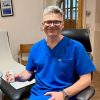
Mr Weaver has a special clinical interest in podiatric regenerative medicine and was among the first clinicians in Europe—and the first in the UK—to offer cryosurgery (cryoablation) for Morton’s neuroma. Driven by a commitment to excellence in patient care, he focuses on delivering precise, evidence-based treatments that prioritise long-term recovery and patient comfort.
Over the past 18 years, he has performed approximately 20,000 procedures for Morton’s neuroma and bursitis. This extensive experience allows him to provide a highly personalised approach, ensuring every patient receives the specialist attention required for the best possible outcomes.
His professional memberships include the Institute of Podiatrists, the International Society of Cryosurgery, and the British Medical Ultrasound Society.